
A check engine light flashing on your dashboard usually means the engine has an active, severe misfire. When a cylinder misfires, unburned fuel can be pushed into the exhaust system, where it can overheat and damage the catalytic converter. If you see the light flashing, reduce your speed, avoid hard acceleration, and get the vehicle checked as soon as possible. If the engine is shaking, stalling, or running badly, pull over somewhere safe and call for help. A solid check engine light is less urgent, but it still needs a proper diagnosis.
Check Engine Light Flashing vs. Solid: What Does It Mean?
So, what does the check engine light mean? It is your vehicle’s way of telling you that the engine computer has detected a problem with the engine, ignition, fuel, or emissions systems. The computer stores a trouble code and turns on the light so you know something needs attention.
The way the light behaves tells you how urgent the problem is:
- Solid (steady) light: A fault has been detected, but it is not usually an emergency. You should schedule a diagnosis soon rather than ignore it.
- Flashing light: The engine is misfiring badly enough, right now, that it may damage other parts. This one calls for prompt action.
An engine misfire happens when one or more cylinders fail to burn their air and fuel mixture properly. You may feel it as a rough idle, shaking, hesitation when you press the gas, or a noticeable loss of power.
Common Causes of a Flashing Check Engine Light
Because a flashing light almost always points to a misfire, the causes tend to fall into a few familiar groups. Every vehicle is different, but these are the usual suspects:
- Ignition coils: A coil that is weak or failing cannot deliver a strong enough spark to its cylinder.
- Spark plugs: Worn, fouled, or damaged plugs are a frequent cause of misfires, especially on vehicles that are overdue for routine tune-ups and maintenance.
- Fuel injectors: A clogged or failing injector can starve a cylinder of fuel or flood it with too much.
- Vacuum leaks: A cracked hose or leaking gasket lets in unmeasured air and throws off the air and fuel mixture.
- Low compression: Internal engine wear or damage can keep a cylinder from building enough pressure to fire properly.
Common Causes of a Solid Check Engine Light
When the check engine light is on and steady, the list of possible causes is much wider. Many of them are related to emissions rather than drivability, so the car may seem to run normally. Common examples include:
- A loose or worn gas cap: If the cap does not seal, the system can read it as a fuel vapor leak.
- Oxygen (O2) sensors: These sensors help the computer manage the fuel mixture, and they wear out over time.
- EVAP system leaks: The evaporative emissions system captures fuel vapors, and small leaks in hoses or valves can trigger the light.
- Mass airflow sensor issues: A dirty or failing sensor can give the computer inaccurate readings about incoming air.
A solid light can also come on for an early-stage misfire before it gets bad enough to flash. That is one more reason not to put off a diagnosis.
What to Do Right Now
Many drivers ask, “Is it safe to drive with the check engine light flashing?” The honest answer is that it is not a good idea to keep driving normally. Continued driving with an active misfire can overheat the catalytic converter and lead to a much more expensive repair. If your light starts flashing, follow these steps:
- Ease off the gas. Slow down and avoid hard acceleration, towing, or climbing steep grades.
- Pay attention to how the engine feels. Notice any shaking, stalling, loss of power, or unusual smells such as a strong burning or fuel odor.
- Pull over safely if it runs badly. If the engine is shaking hard, losing power, or stalling, find a safe place to stop and call for help instead of pushing on.
- Check the other gauges. Look at the temperature and oil pressure gauges and any other warning lights. If something else is in the red, stop driving.
- Keep the trip short. If the vehicle seems to run acceptably, drive gently and only as far as needed to get it checked.
- Get a professional diagnosis as soon as possible. The sooner the cause is found, the better the chance of avoiding damage to other parts.
If the light is solid instead, check that your gas cap is tight and plan to have the vehicle looked at soon. Our check engine light diagnostic service is designed to find the actual cause rather than just clear the light.
Why a Code Read Alone Isn’t a Diagnosis
It is easy to assume that plugging in a code reader tells you exactly what is wrong. In reality, a trouble code points to a system or a symptom, not a specific failed part. For example, a misfire code tells you which cylinder is misfiring, but not whether the cause is a spark plug, an ignition coil, an injector, a vacuum leak, or a compression problem.
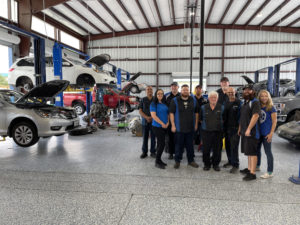
That is why our ASE-certified technicians, with over 35 years of experience, use the code as a starting point. From there, they confirm the root cause with testing so you are not paying for parts you did not need. Every visit also includes a digital vehicle inspection with photos sent to your phone, so you can see what we see before you decide on a repair.
Repairs are backed by a 3-year / 36,000-mile nationwide warranty. For more background, see our answers to common questions about check engine lights.
The Check Engine Light and Texas Emissions Inspections
There is also a practical reason to deal with the light here in the Lake Houston area. In Texas counties that still require emissions testing, such as Harris County, an illuminated check engine light causes the vehicle to fail the emissions portion of the inspection.
If your inspection is coming up and the light is on, we can diagnose the problem, complete the repair, and help with your state inspection. From our shop in Humble, we also help drivers with check engine light problems in Kingwood, Atascocita, and Summerwood.
Frequently Asked Questions
Is it safe to drive with the check engine light flashing?
It is best not to keep driving normally. A flashing light usually means an active misfire that can overheat and damage the catalytic converter. Slow down, avoid hard acceleration, and get the vehicle checked as soon as possible. If the engine shakes, stalls, or loses power, pull over somewhere safe and call for help.
What is the difference between a solid and flashing check engine light?
A solid light means the engine computer has found a fault that needs a diagnosis soon, but it is usually not an emergency. A flashing light means a severe misfire is happening right now, and continuing to drive can cause further damage. Both deserve attention, but a flashing light is more urgent.
Can a loose gas cap make the check engine light flash?
A loose gas cap typically causes a solid light, not a flashing one, because it affects the evaporative emissions system rather than how the engine runs. If your light is flashing, the cause is far more likely to be a misfire from ignition, fuel, air, or compression problems, so have it checked promptly.
Will the check engine light cause me to fail inspection in Harris County?
Yes. In Texas counties that still require emissions testing, including Harris County, an illuminated check engine light causes the vehicle to fail the emissions portion of the inspection. The best approach is to have the underlying problem diagnosed and repaired before your inspection so the light stays off.
If your check engine light is flashing or on, we are here to help. Beckwith’s Car Care is a female-owned and operated independent shop at 1919 Farm to Market 1960 Bypass Rd E in Humble, open Monday through Friday from 6 AM to 6 PM, with free shuttle service available. Call us at 281-540-2000, learn more about our check engine light repair, or schedule an appointment online.