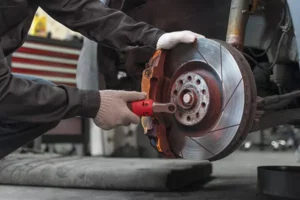
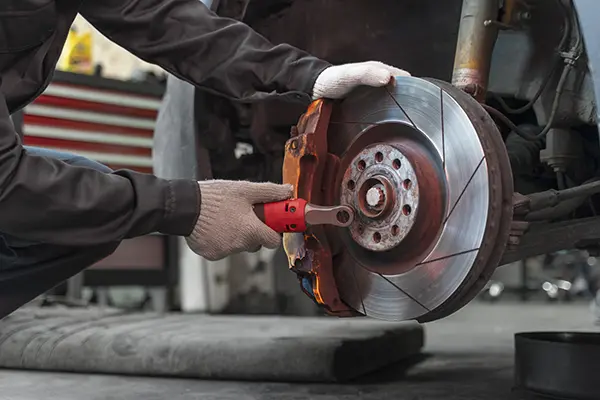
If you notice your car shaking when braking, or the brake pedal pulses under your foot as you slow down, the most common cause is an uneven brake rotor surface. People usually call this “warped rotors,” but in most cases the rotor isn’t actually bent. Instead, brake pad material has built up unevenly on the rotor, or the rotor has worn to slightly different thicknesses around its face. Worn suspension parts, a sticking caliper, or tire problems can also play a part. Whatever the cause, it’s a safety issue, and it’s worth having your brakes inspected soon.
Where You Feel the Shaking and What It Suggests
Where the vibration shows up gives a good first clue about where the problem is. Here’s a general guide:
- In the brake pedal: A pulsing or throbbing pedal usually points to the rotors. As the pads squeeze a rotor with uneven thickness or deposits, the pressure rises and falls, and you feel it through your foot.
- In the steering wheel: Steering wheel shaking when braking often points to the front rotors, since the front brakes do most of the stopping work. Worn steering or suspension parts can make it feel worse.
- Through the seat or the whole car: A vibration you feel in your seat, with a steady steering wheel, can point to the rear brakes. A stuck caliper or loose suspension parts can also cause a general shudder.
- Car pulls to one side while braking: This can mean a caliper is sticking, a brake hose is restricted, or pads are wearing unevenly from side to side.
These are starting points, not a diagnosis, since several issues can overlap.
Common Causes of a Car Shaking When Braking
Here are the issues we see most often behind brake-related shaking:
- Uneven rotor surfaces (warped rotors): Uneven pad deposits or thickness variation on the rotor face. This is the most common cause by far.
- Worn brake pads: Pads that are worn thin, glazed, or wearing unevenly don’t grip the rotor smoothly.
- Sticking calipers or slide pins: A caliper that doesn’t release fully keeps the pad dragging on the rotor, which builds heat and uneven wear.
- Worn suspension or steering parts: Loose ball joints, tie rod ends, or control arm bushings can let the wheel move under braking force and amplify any vibration.
- Tire and wheel issues: Out-of-balance tires, uneven tire wear, or lug nuts that weren’t tightened evenly can all add to the problem.
Brakes Squeaking or Grinding: What the Noises Mean
Noises are often the earliest brake warning.
Brakes Squeaking or Squealing
Many brake pads have a small metal tab called a wear indicator. When the pad gets thin, the tab touches the rotor and makes a high-pitched squeal. Squeaking can also come from dust, moisture, or certain pad materials, but a squeal that keeps coming back is a sign to schedule an inspection.
Brakes Grinding
Grinding is more serious. It usually means the pad material is gone and metal is rubbing against metal. That damages the rotors quickly and reduces your stopping power. If your brakes are grinding, stop driving the car as soon as you safely can and have it looked at.
If you’d like more background, we’ve also put together answers to common brake questions that drivers ask us.
Why Houston Heat and Traffic Are Hard on Brakes
Brakes work by turning motion into heat. The more often you stop and the hotter things get, the harder your brakes work.
Driving around Humble and the greater Houston area checks both boxes. Stop-and-go traffic means constant braking, and long, hot summers mean your brakes start out warm before you even touch the pedal. Heat is one of the main reasons pad material transfers unevenly onto rotors, which leads to that pulsing feeling.
How long pads and rotors last varies widely with driving style and vehicle. A good rule is to have your brakes inspected at least once a year, or any time you notice symptoms.
What a Proper Brake Inspection Checks
A good brake inspection looks at the whole system, not just the pads. At our shop, our ASE-certified technicians check:
- Pads: Thickness, wear pattern, and whether they’re wearing evenly side to side.
- Rotors: Surface condition, thickness, and signs of uneven wear, scoring, or heat damage.
- Calipers: Whether they apply and release smoothly, and whether slide pins move freely.
- Brake hoses and lines: Cracks, leaks, bulging, or restrictions.
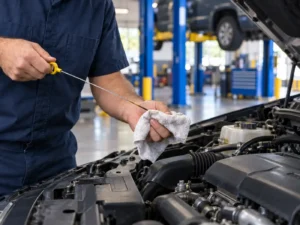
- Brake fluid: Level and condition, since old or contaminated fluid can affect braking performance.
Every visit includes a digital vehicle inspection with photos sent to your phone, so you can see exactly what we see before you decide on any repair. You can learn more about our brake repair and service on our service page.
Resurface or Replace Rotors?
When rotors cause shaking, there are generally two options. Resurfacing (also called machining or “turning”) removes a thin layer of metal to restore a smooth, flat surface. That only works if the rotor will still be thick enough afterward to meet the manufacturer’s minimum specification.
If the rotor is already too thin, cracked, or badly damaged, replacement is the safer choice. Many newer vehicles use thinner rotors that leave little room for resurfacing, so replacement is common. We’ll measure your rotors and explain which option makes sense for your vehicle.
When It’s Not the Brakes: Steering Wheel Shaking at High Speeds
Here’s a simple test. If the shaking happens only when you press the brake pedal, the brakes are the likely source. If you notice steering wheel shaking at high speeds while you’re just cruising and not braking, the cause is usually somewhere else.
Common causes of shaking at highway speed include:
- Tires that are out of balance
- Uneven or damaged tires, such as a bulge or flat spot
- Bent wheels
- Worn suspension or steering components
- Alignment problems, which also cause uneven tire wear
If that sounds more like your situation, our wheel alignment service uses Hunter wheel alignment equipment, and our steering and suspension repair team can track down worn parts.
Frequently Asked Questions
Is it safe to drive if my car is shaking when braking?
It’s not something to put off. Mild shaking often comes from uneven rotors, but it can also mean a sticking caliper or worn suspension parts, and any of these can affect how well your car stops. If the shaking is severe or comes with grinding, pulling, or a soft pedal, stop driving and have the brakes inspected right away.
Why is my steering wheel shaking when braking?
Steering wheel shaking when braking usually points to the front rotors, which handle most of the stopping force. Uneven pad deposits or rotor thickness variation make the brakes grab and release as the wheel turns. Worn tie rods, ball joints, or other steering parts can make the vibration more noticeable through the wheel.
Do warped rotors always need to be replaced?
Not always. If the rotors still have enough thickness after machining to stay above the manufacturer’s minimum, resurfacing can restore a smooth surface. If they are too thin, cracked, or heat-damaged, replacement is the safer option. A technician needs to measure the rotors to know which choice fits your vehicle.
How often should I have my brakes inspected?
Brake wear varies widely with driving style and vehicle, so there isn’t one mileage number that fits everyone. A good rule is to have your brakes inspected at least once a year, or any time you notice symptoms like shaking, squeaking, grinding, pulling, or a pedal that feels different than usual.
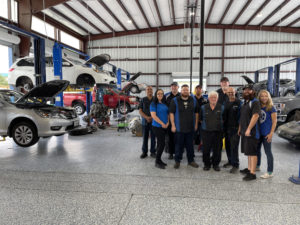
Beckwith’s Car Care is a female-owned and operated independent shop at 1919 Farm to Market 1960 Bypass Rd E in Humble, with ASE-certified technicians and over 35 years of experience. Our repairs are backed by a 3-year / 36,000-mile nationwide warranty, and we offer free shuttle service while your car is with us. We also provide brake service in Kingwood, brake service in Atascocita, and brake service in Summerwood for drivers across the Lake Houston area.
If your car is shaking when braking or your brakes are making noise, we’re happy to take a look. Learn more about our brake service in Humble, call us at 281-540-2000 (Monday through Friday, 6 AM to 6 PM), or schedule an appointment online.